Print

Wiki - Germany - Iron Cross


Historical Introduction

The Iron Cross (Eisernes Kreuz) originated in Napoleonic Prussia, instituted by King Frederick William III on March 17, 1813, as a decoration for bravery during the war against France. Its design—a cross pattée with a silver frame—was loaded with patriotic symbolism. The cross was reactivated during key historical moments: the Austro-Prussian War (1870), World War I (1914), and again during World War II.

Reintroduction in 1939

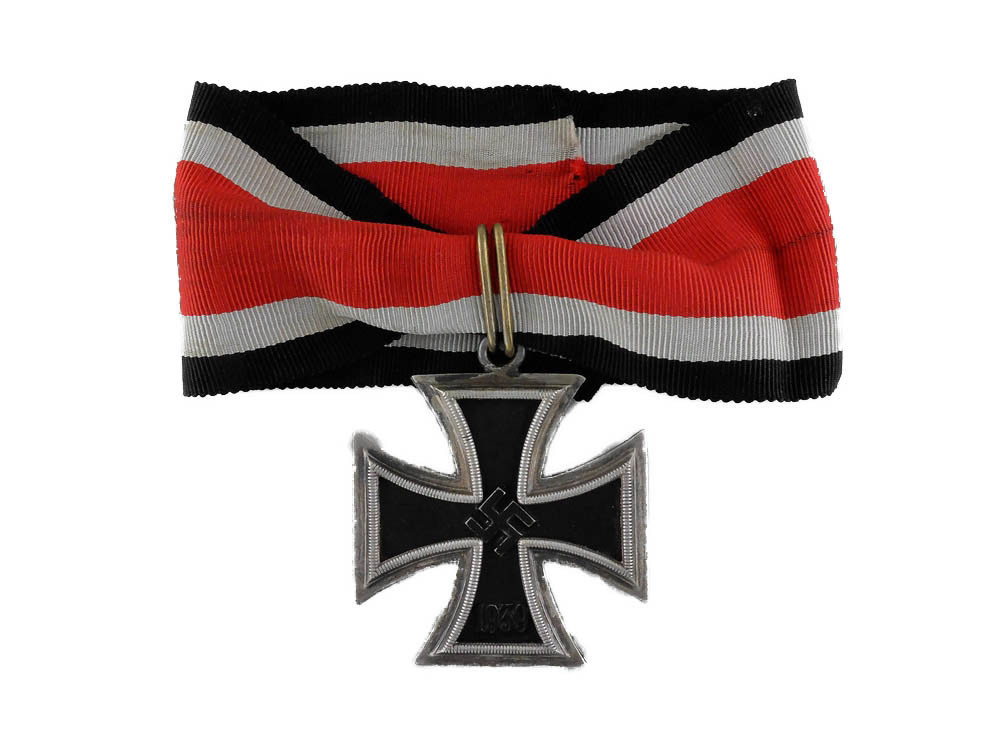
On September 1, 1939, with the outbreak of World War II and the invasion of Poland, Adolf Hitler decreed the reintroduction of the Iron Cross as a national decoration (not just Prussian). This new regulation established three basic levels: Second Class, First Class, and the newly introduced Knight's Cross. The latter was designed as an intermediate distinction between the First Class Cross and the Grand Cross, intended to reward exceptional bravery or outstanding leadership.

Classes and Grades of the Iron Cross

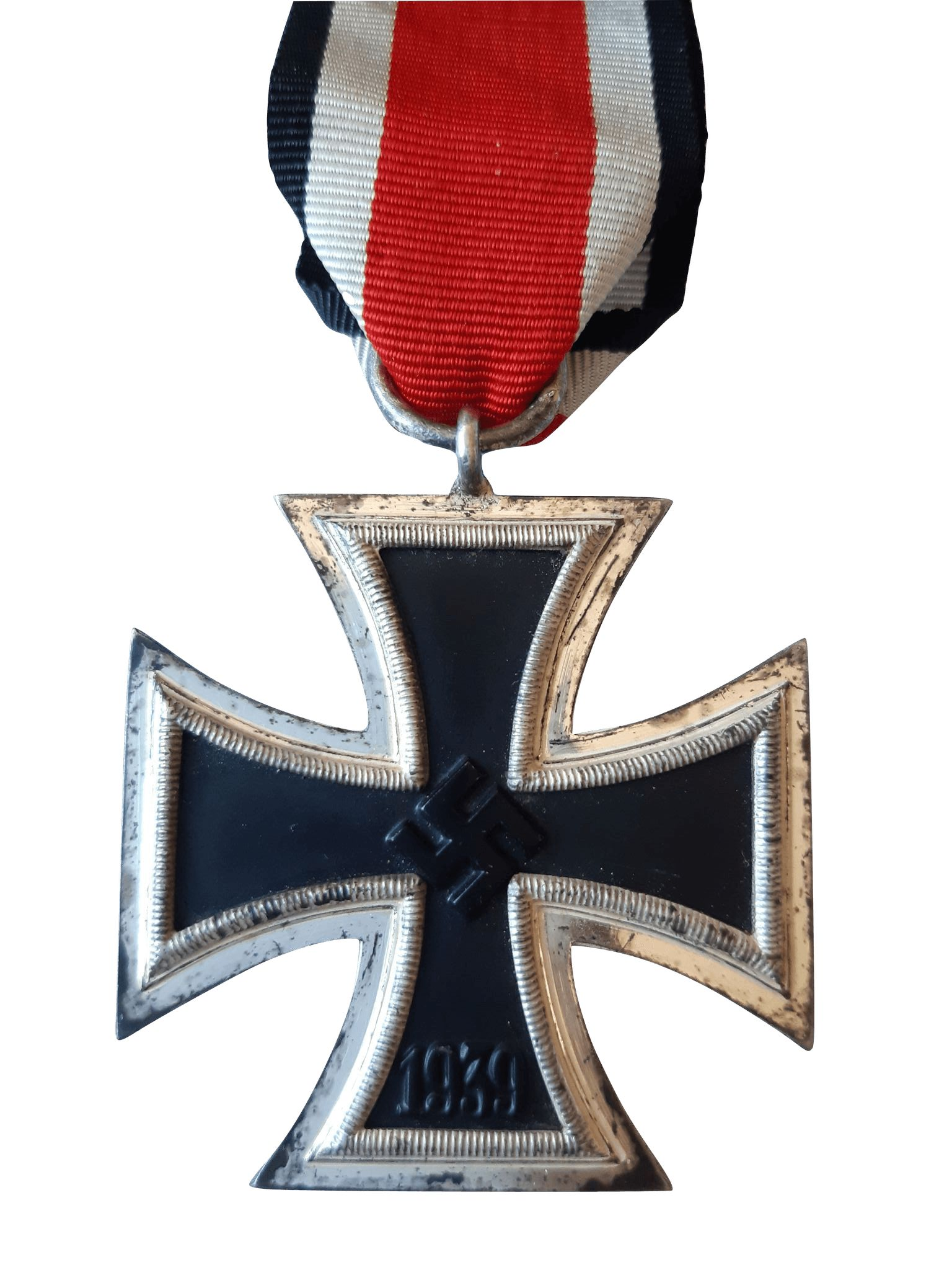
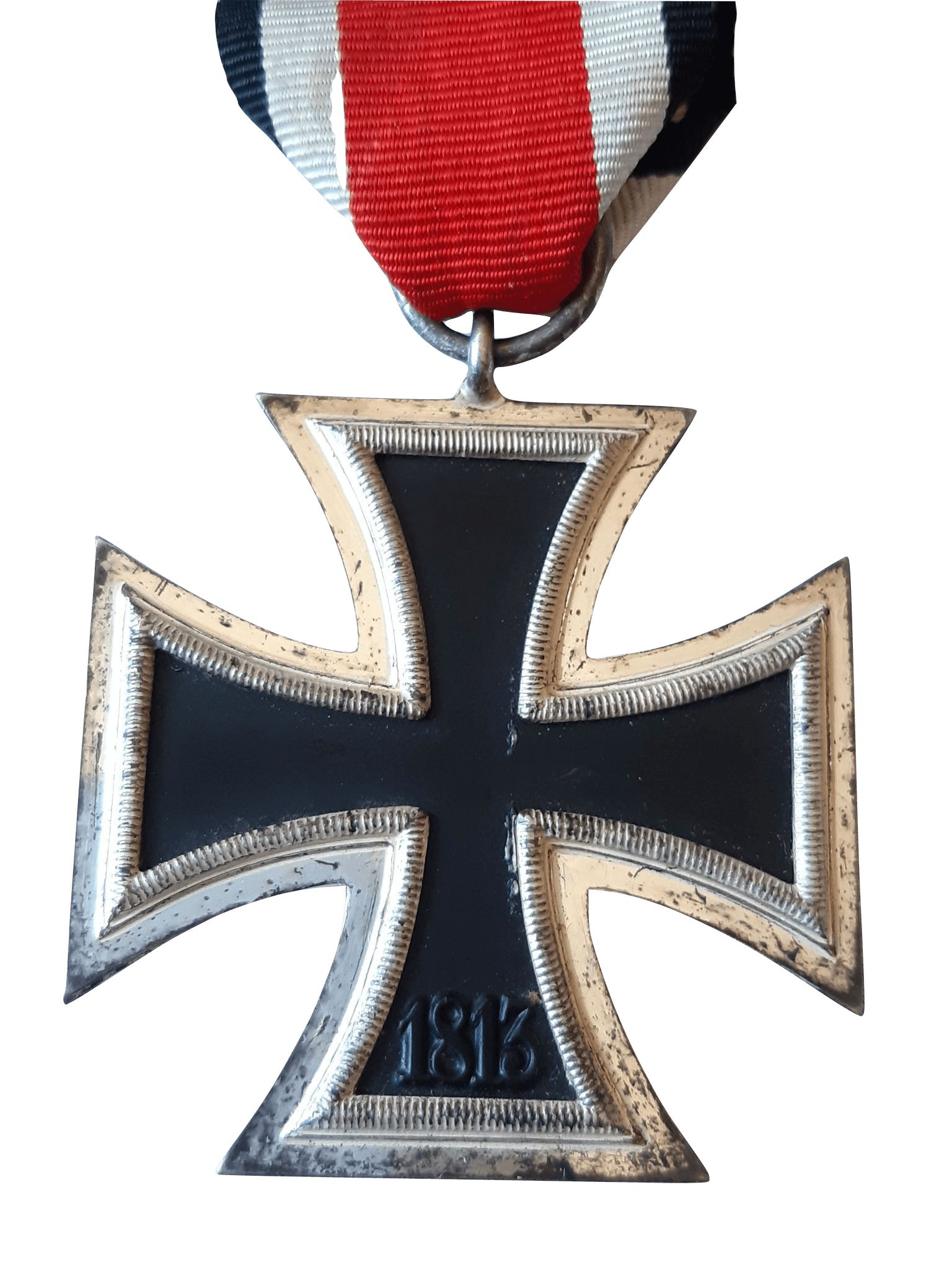
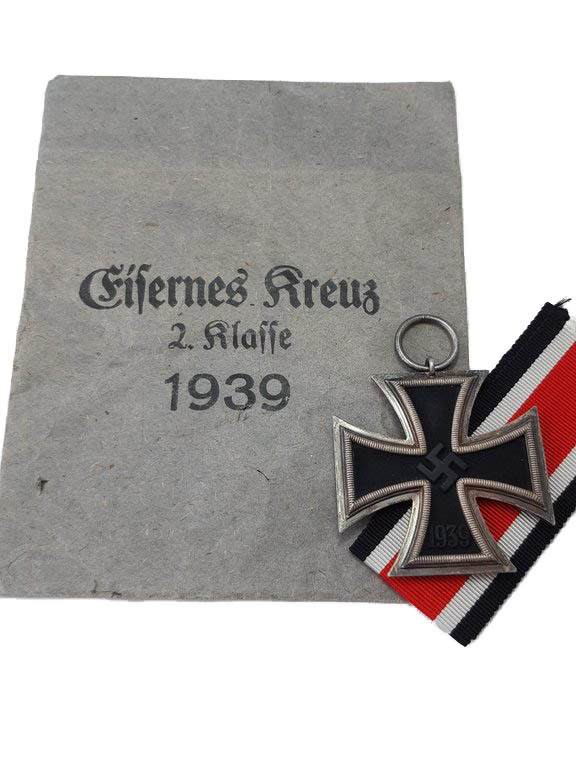
Iron Cross Second Class (EK II)

Awarded to enlisted soldiers and junior officers.

Worn suspended on a ribbon from the uniform’s left buttonhole.

Approximately 4.5 million EK II medals were awarded during the war.

cruz de hierro de 2 clase segunda guerra mundialcruz de hierro de 2 clase reverso

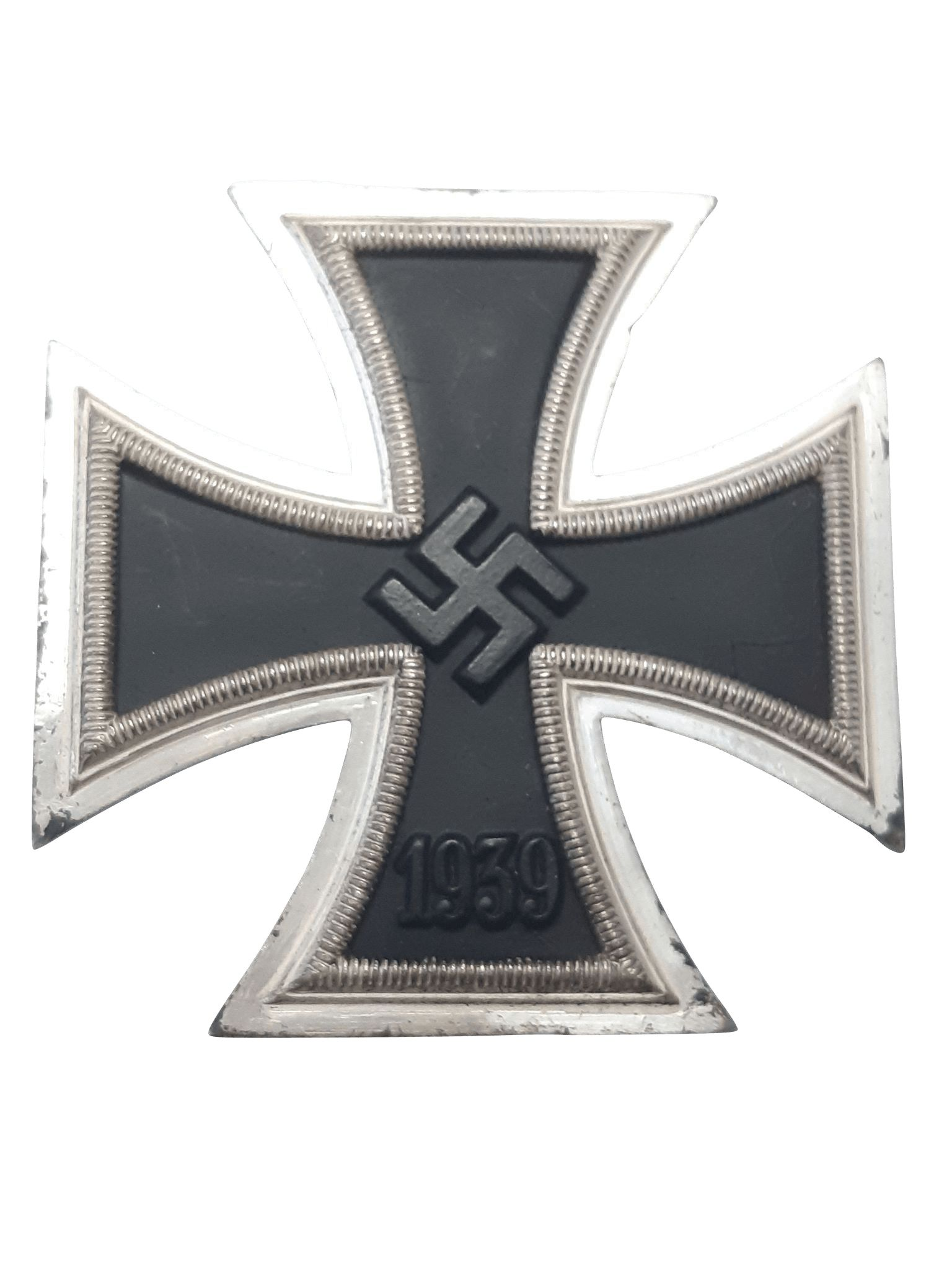
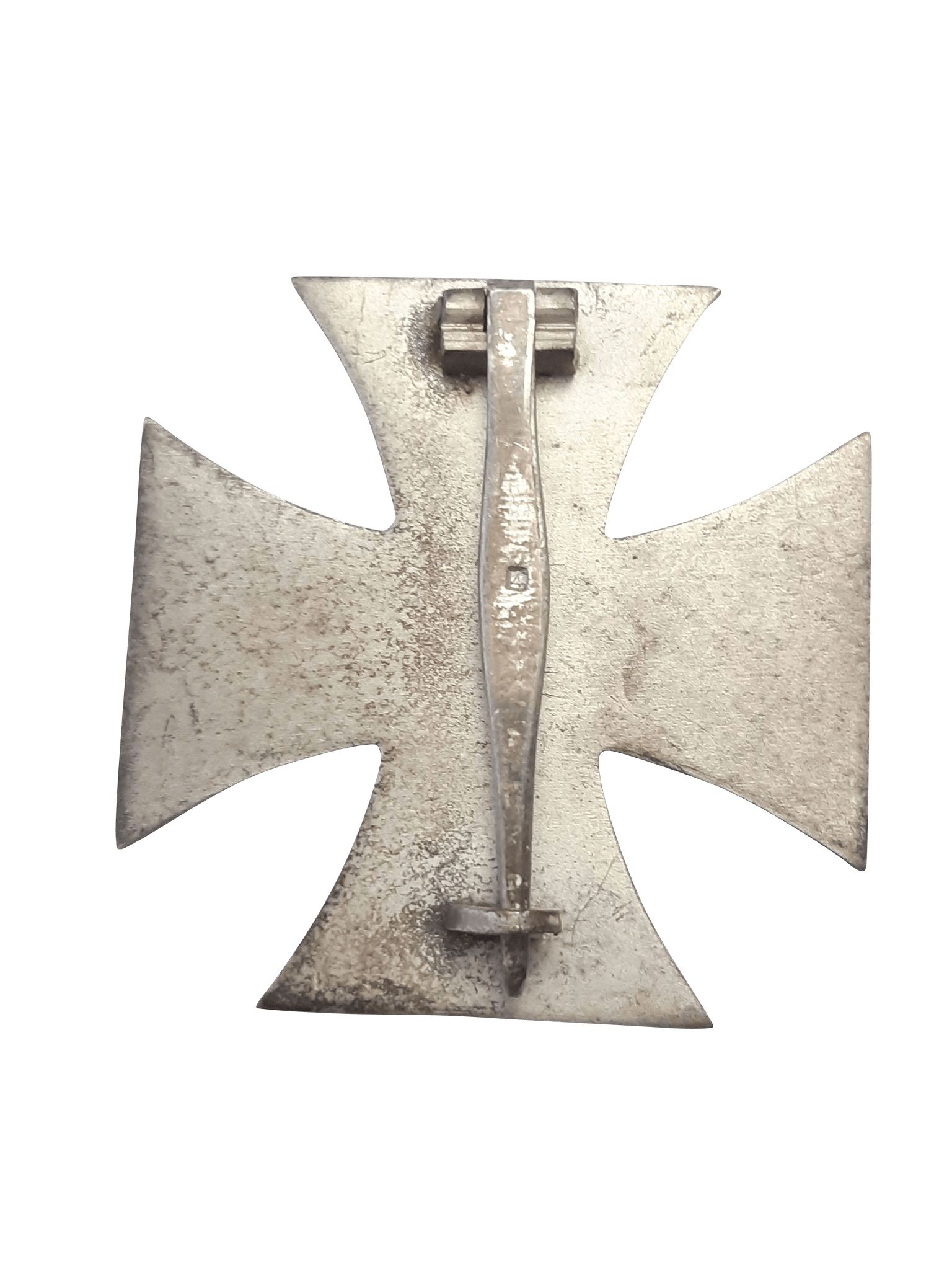
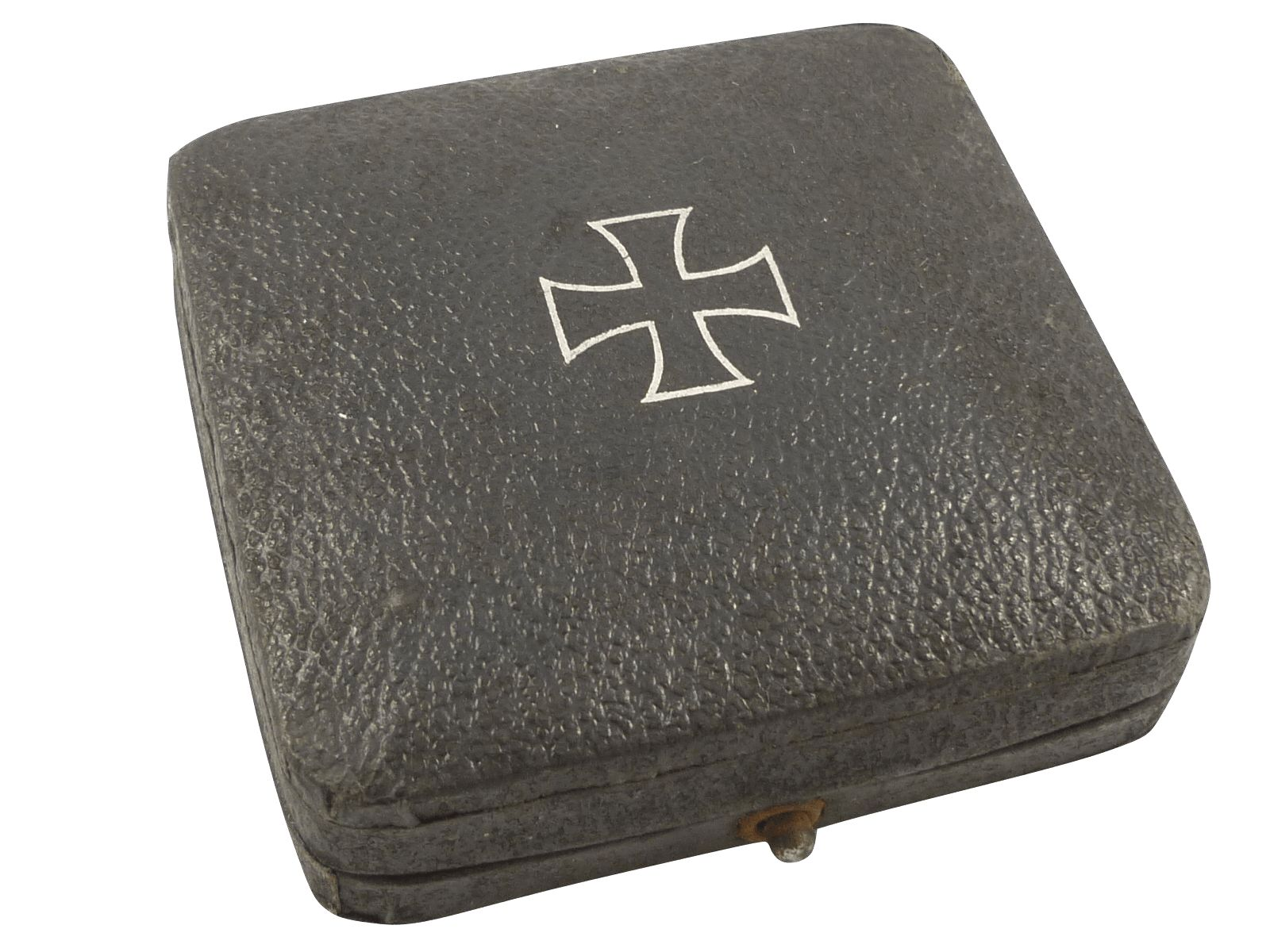
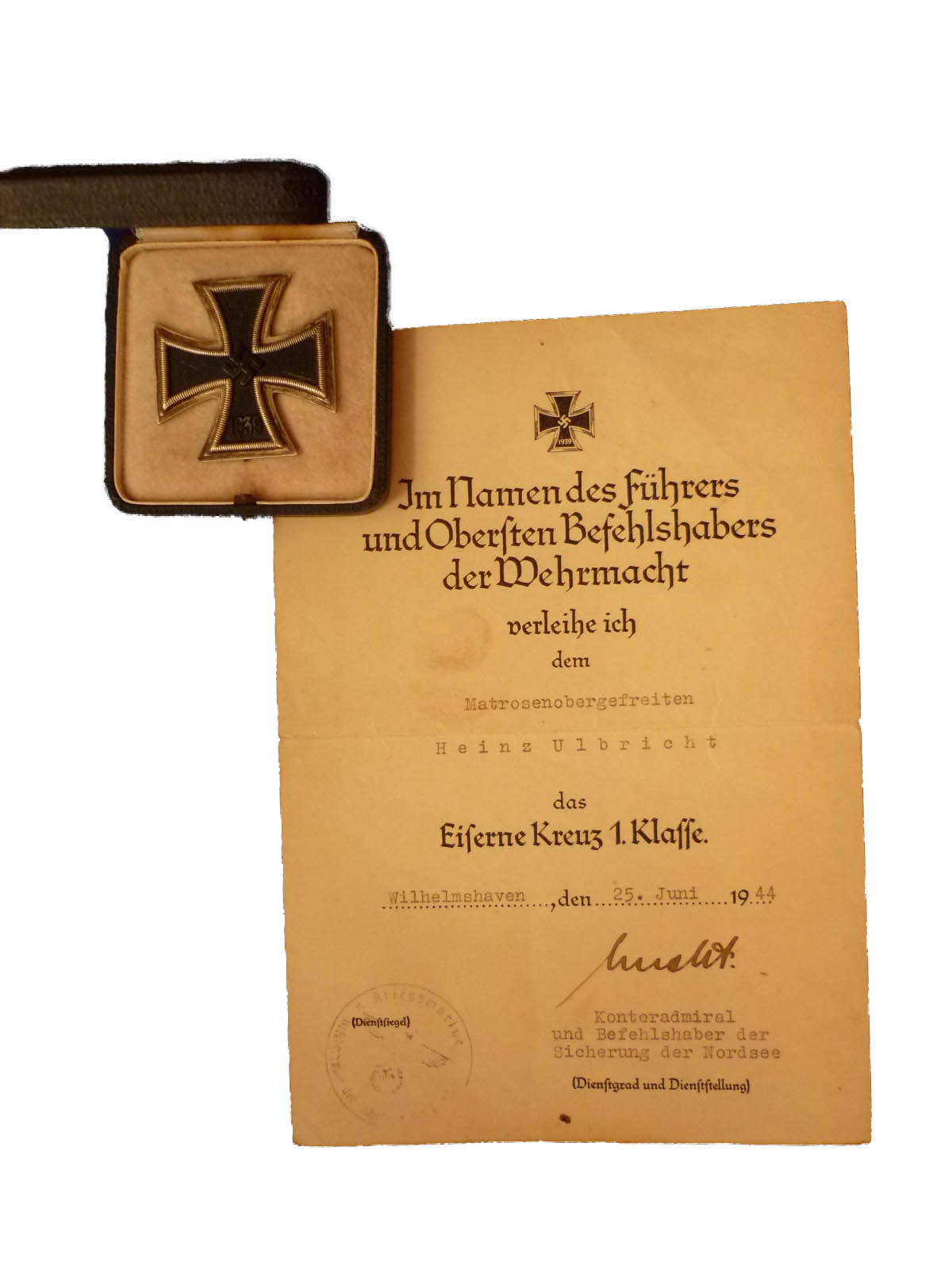
Iron Cross First Class (EK I)

Granted to officers, non-commissioned officers, and soldiers for meritorious acts.

A pin-on medal worn above the left breast pocket, without a ribbon.

Roughly 300,000 medals of this class were awarded.

cruz de hierro de 1 clase segunda guerra mundialcruz de hierro de 1 clase segunda guerra mundial reverso

Knight’s Cross of the Iron Cross (Ritterkreuz)

rk

Grades and Variations

Instituted on September 1, 1939, within a hierarchical system (Cross, Knight’s Cross, Grand Cross).

Subsequent grades added layers of distinction:

  • Knight's Cross (Ritterkreuz)

  • Knight's Cross with Oak Leaves

  • … with Oak Leaves and Swords

  • … with Oak Leaves, Swords, and Diamonds

  • … with Golden Oak Leaves, Swords, and Diamonds (the only gold-grade award of its kind)

Award Statistics

  • Ritterkreuz: over 7,000 recipients (7,161 according to federal archives)

  • Oak Leaves: 883 recipients

  • Oak Leaves and Swords: 160

  • Oak Leaves, Swords, and Diamonds: 27

  • Golden Oak Leaves, Swords, and Diamonds: awarded only to Hans-Ulrich Rudel on December 29, 1944

Manufacturing and Notable Makers

Materials and Construction

The crosses were made of three components: an iron core and a silver or silver-plated metal frame, soldered together. The black core resembled cast iron, displaying a swastika at the center and the date 1939 on the lower arm. The reverse side featured the date 1813.

Workshops and Markings

Production during WWII was regulated by two main entities: the German High Command (OKW/Heeresverwaltung) and the League of German Orders Manufacturers (LDO). The LDO grouped licensed manufacturers and ensured quality standards. Each maker had to mark their decorations with a code number (LDO or PKZ – Präsidialkanzlei), although not all items were marked.

Key Manufacturers

  • Steinhauer & Lück (S&L), Lüdenscheid: A prolific maker before, during, and after the Third Reich, marked with “4” or “L/16.” Known for high-quality pieces, often for officers.

  • Friedrich Orth, Vienna: Marked “15.” Valued by collectors for construction quality.

  • Deschler & Sohn, Munich: Early-war maker with code “1.”

  • C. E. Juncker, Berlin: Renowned for Luftwaffe medals, marked “2” or “L/12.”

  • AHM (Hanseatic Metalware Group): Specialized in mass-produced EK II versions.

Manufacturer Codes

Codes varied between the LDO system (“L/”) and PKZ numeric codes. Example: “L/11” corresponds to Wilhelm Deumer.

Many EK II medals were unmarked, although some have hidden ring marks.

Knight’s Crosses were more often marked, either on the ring or ribbon, sometimes also indicating silver content (“800”).

Fakes and Reproductions

Due to high collector demand, fakes are widespread, especially from Eastern Europe and the UK. Experts identify originals by frame shape, patina, weight, iron core magnetism, and soldering details.

Post-1957 Production

After Nazi symbols were banned, several makers resumed Iron Cross production with a modified design: the swastika was replaced by oak leaves. These versions, authorized by the Bundeswehr, were worn by veterans. Steinhauer & Lück produced many such pieces, often using original dies with slight adaptations to comply with new legal standards.

Notable Recipients of the Knight’s Cross

Heer (Army)

Erwin Rommel (1891–1944)
Awarded on May 27, 1940, as Generalmajor and commander of the 7th Panzer Division during the French campaign. Later received Oak Leaves (1941), Swords (1942), and Diamonds (1943). Known as the “Desert Fox,” he was used as a propaganda icon. His indirect involvement in the plot against Hitler led to his forced suicide.

Luftwaffe (Air Force)

Werner Mölders (1913–1941)
First pilot to reach 100 aerial victories. Awarded the Knight’s Cross with Oak Leaves, Swords, and Diamonds on July 16, 1941. Died in a plane crash and became a Luftwaffe martyr. JG 51 was named “Mölders” in his honor.

Adolf Galland (1912–1996)
Fighter ace with 104 confirmed victories. Received the Knight’s Cross with Diamonds in 1941. Known for his disputes with Göring. After the war, he cooperated with the Allies and published his memoirs.

Hans-Ulrich Rudel (1916–1982)
Stuka pilot with over 2,500 combat missions and 500 tank kills. The only recipient of the Golden Oak Leaves, Swords, and Diamonds (December 29, 1944). His postwar neo-Nazi ties have tarnished his legacy.

Kriegsmarine (Navy)

Günther Prien (1908–1941)
Awarded on October 18, 1939, for his U-47 attack on HMS Royal Oak at Scapa Flow. One of Germany’s first major naval victories. Lost at sea in March 1941.

Otto Kretschmer (1912–1998)
Commanded U-99, one of WWII’s most successful U-boat commanders. Received Knight’s Cross with Oak Leaves and Swords in 1941. Captured by the British. Rejoined the Bundesmarine postwar, reaching admiral rank.

Waffen-SS

Joachim Peiper (1915–1976)
Awarded Knight’s Cross with Oak Leaves in 1943. Implicated in the Malmedy massacre during the Ardennes Offensive. Convicted of war crimes, released in 1956, and assassinated in France in 1976.

Kurt “Panzer” Meyer (1910–1961)
Commander of the 12th SS-Panzer Division “Hitlerjugend,” awarded Knight’s Cross with Swords. Convicted of war crimes in Normandy.

Michael Wittmann (1914–1944)
Awarded the Knight’s Cross on January 14, 1944, as SS-Untersturmführer and Tiger I commander. Famous for his actions at Villers-Bocage. Later received Oak Leaves. A controversial figure due to SS affiliation.

Other Notable Cases

Isoroku Yamamoto (Japan)
Japanese admiral and Pearl Harbor architect. Posthumously awarded the Knight’s Cross with Swords by Nazi Germany, symbolizing Axis military cooperation. Killed in Operation Vengeance by US forces.

Postwar Use of the Iron Cross

In 1957, the Federal Republic of Germany legalized a modified version of the Iron Cross, replacing the swastika with an oak leaf, in compliance with laws banning Nazi symbols.

Conclusion

The Iron Cross represents a symbolic link from Napoleonic Prussia to Nazi Germany, adapted across multiple wars.

Its 1939 reintroduction created a hierarchical system of awards, honoring both individual acts of bravery and strategic command roles.

The Knight’s Cross, especially its highest grades, became emblematic of Nazi military propaganda and remains one of the most sought-after decorations among militaria collectors—both as a central item and within broader themed collections.


See III Reich decorations in the online store